
47 Delicious Foods to Eat in Trieste (Trieste Food Guide by locals)
Do you want to enjoy the foods to eat in Trieste, Italy, as locals do? In this case, you cannot miss trying the local food I grew up with. Discover the culinary delights of my hometown, Trieste, with my comprehensive Trieste Food guide. Indulge in the rich and flavorful pasta dishes the city is known for, or satisfy your sweet tooth with delicious pastries that make the perfect souvenir for your friends and family.
Your taste buds are in for a treat as you explore the gastronomic wonders of Trieste. Here are all the most delicious dishes in Trieste to enjoy at lunch and dinner while exploring my beautiful hometown.
And don’t you like to have an aperitivo or a liquor after dinner? I’ve got you covered on that, too, like always. Discover the most loved after-dinner liquors in Trieste (these are also good souvenirs to take home for yourself or your friends).
Enjoy all the food in my hometown, know this city like a local, and know what to order in Trieste restaurants.
In Trieste, you will find typical Italian recipes and a mix of Eastern European ingredients that you won’t find in the rest of Italy, such as cabbage, goulash, “cren,” horseradish, and mustard. Because Trieste is a seaside city, you will also have an extensive variety of fresh fish like seabass, tuna, mussels, clams, and cuttlefish prepared in delicious ways.
My hometown has the perfect dish for every traveler, so prepare your notepad to write down a list you don’t want to forget to try while visiting.
Hi! I’m Valentina
I help travelers avoid travel anxiety by providing all the necessary info and tips to plan the most organized trip. Be part of my super-anxious travelers to receive my 42-page guide to becoming a super-organized traveler, weekly travel discounts, detailed itineraries, and more. Let’s fight travel anxiety together!

PIN IT FOR LATER

No time to read it now? Save it for later.
If you decide to visit Trieste before embarking on your cruise, don’t miss to read my Complete Trieste Cruise Port Guide, where I explain in detail how to reach the cruise terminal from every airport in the region.
Don’t miss my How to Spend One Day in Trieste, where I take you to the most famous landmarks and hidden gems (plus some stops to enjoy the most local delicacies).
MORE TRIESTE TRAVEL GUIDE TO HELP YOU PLAN YOUR TRIP
- PLAN YOUR TRIP: Tips & info to visit Trieste and top day trips from Trieste
- WHERE TO STAY: Best hotels with sea views and the closest hotels to the cruise port
- FOOD: Unmissable Trieste local dishes you can’t miss
- WHAT TO DO: Best things to do in Trieste and the handmade souvenirs to buy
- CRUISERS GUIDE: How to reach the cruise pier and the best 1-day itinerary in Trieste
Trieste Food Guide: 47 Delicious Foods and Drinks to Try
Meat dishes in Trieste

1. Salumi / Cured Meat and Cheeses:
Trieste is a haven for meat and cheese lovers, offering various Italian cured meats and local cheeses. From the classic favorites like mortadella, prosciutto, and culatello to the flavorful salame and salsicce, you can find it all in Trieste.
Whether you’re looking for a delicious sandwich or a charcuterie board to enjoy while having an aperitivo in one of the many wine bars in Trieste, the city has something to satisfy every meat craving.
You can book an Italian Aperitivo Experience to enjoy Italy as we do and meet other travelers.
2. Jota:
Jota is the most famous soup and probably the most loved food by my husband, Lajos. Everybody loves Jota, and if you ask a local what to eat in Trieste in winter, they will probably tell you to eat a good hot plate of Jota. This soup is typical of that area, but you may also find it in some Slovenian restaurants. It is made with sauerkraut, potatoes, and beans.
It can be vegan or contain some meat, such as smoked pancetta, ham, or sausages. It is the perfect meal in Trieste’s cold winters, so even though I’m not a bit fan of it (I don’t like that much sauerkraut), I could not add it to my food guide!

4. Goulash:
Gnocchi di pane or Canederli are bread dumplings made with dry bread, pancetta/speck, eggs, cheese, flour, milk, and parsley. These are probably my favorite food to eat during winter (but I also make them very often on those cold rainy days in England).

3. Gnocchi di pane o Canederli:
The Trieste Gulash is one of everyone’s favorite dishes to eat in winter. This is another pillar dish of my food guide. It’s a meat stew much thicker than the Hungarian Goulash soup. You can have it with polenta, potato, or bread dumplings.
Another version made with boiled potatoes that my grandmother used to make for me is Calandracca, but unfortunately, it is very difficult to find in local trattorias.
Canederli can be eaten with ragu alla bolognese or goulash. Some people like them with butter, so it is up to you. This dish reminds me of my grandmother; she prepared it for us very often and was the best in the world (like everything our grandmother prepares, am I right?).
Travel Tip: If you arrive in Trieste too early for your check-in or your departure time is too many hours after your check-out, and you need a place to store your luggage, check out Radical Storage in Trieste, a website that shows you all the safe places to keep your bags while still exploring Trieste.

5. Pizza:
You are in Italy, after all, so enjoy a typical Italian pizza. To make it local, try the pizza with truffle. Truffles come from Slovenia and Croatia, and thanks to their proximity, locals love to eat them when in season.

6. Piatto Misto di Caldaia:
This mixed plate is made with different cuts of boiled pork. It is something very typical of Trieste and also one of my favorites. It goes with mustard and horseradish and is often served with sauerkraut or deep-fried breaded vegetables. I usually eat it at “Buffet da Pepi.”

7. Antipasto di Pesce misto:
Antipasto misto di Pesce is another option if you want to try as much of the delicious cuisine Trieste offers as possible. This mixed plate can be a starter or, as my mom likes, the main course because it can be so significant to fill you up.
Even if not mentioned on the menu, you can always ask if they can prepare a plate with different fish starters for you in every seafood restaurant.
Why not try them all when you can taste so many delicious dishes? This is also one of the reasons why you are visiting Trieste after all, aren’t you? To taste all the best foods to eat.
For the best Mixed Fish Starter, book a table at Angelina Restaurant, where you will enjoy a plate of 8 different fish starters.
Travel Safety Tip: As soon as you book your next adventure, buy good travel insurance in case you need to “unfortunately” delay, extend, or cancel your trip. I usually find good deals on VISITORSCOVERAGE for up to 1 month of trip length and SAFETYWING for longer trips. They are insurance companies that cover everything related to your travel.
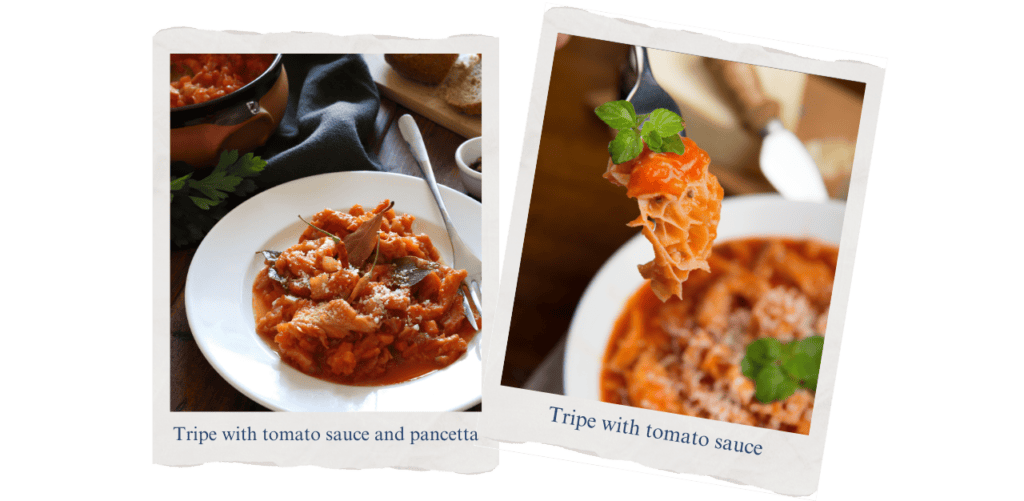
8. Tripe:
When visiting Trieste, one must try the local specialty known as tripe stew. This delicious dish is made with cow stomach, tomato sauce, onion, and herbs and is a popular choice among locals and tourists alike. Tripe stew is one of my father’s favorite foods to eat; my grandmother often makes it for him.
Vegetarian dishes to taste in Trieste
9. Liptauer:
Liptauer cream is a spreadable cheese dip originally from Slovakia’s Liptov region. In Trieste, liptauer cream is known as “Liptauer Triestino” and is often made with a slightly different blend of spices.
It contains sheep ricotta, mascarpone, sweet gorgonzola cheese, spring onion, sweet or spicy paprika, and a pinch of salt.
You can find Liptauer cream in most supermarkets, “Gastronomie” and local “Osterie.”
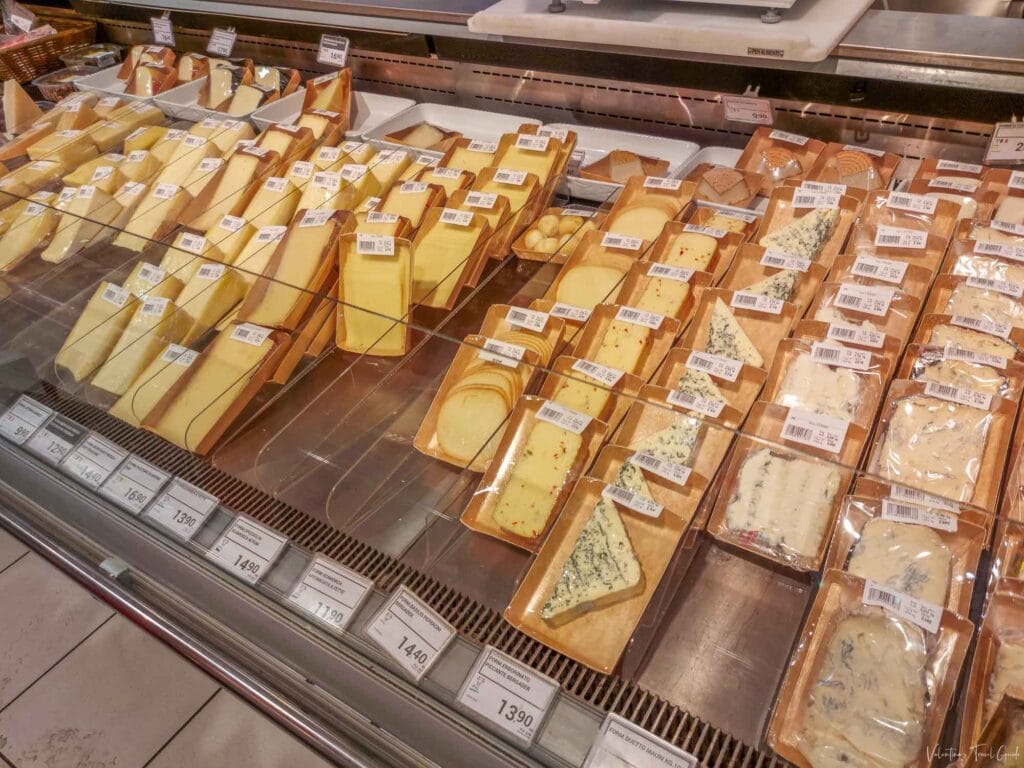
10. Local cheeses:
A trip to Trieste isn’t complete without indulging in the local cheeses! The surrounding Friuli Venezia Giulia region produces a stunning variety, each cheese seemingly more delicious than the last.
While I have my favorites—Latteria for savory pies, Malga cheese, Montasio, and creamy goat ricotta—there’s a whole world of local cheeses waiting to be explored in Trieste.
If you are curious about Trieste and Friuli Venezia Giulia’s local cheese, I highly recommend you visit a local food shop or a supermarket. There, you will find a vast variety to taste and maybe take home as a souvenir. Your family and friends will surely appreciate it. Food is one of the best souvenirs from Trieste, in my opinion.
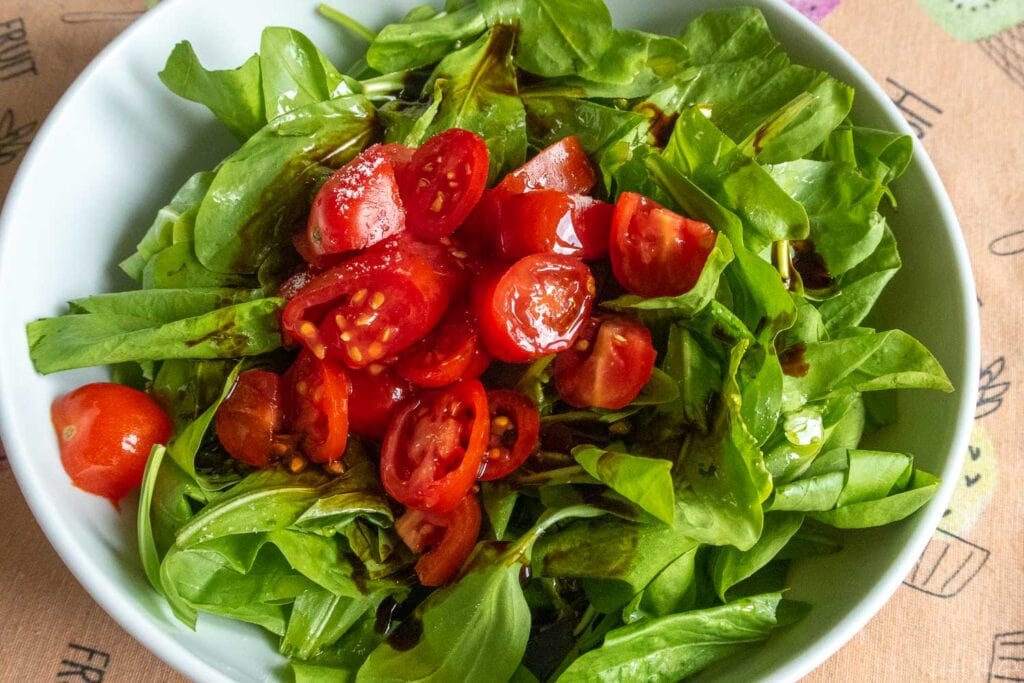
11. Radicchio verde:
The radicchio verde (green chicory), also called “zuccherina di Trieste,” is a typical green leaf you can order in many local restaurants as a side dish and find in any supermarket in the city. It has a bitter taste, which I adore.
My favorite way to eat it is with sweet cherry tomatoes, a pinch of salt, local extra virgin olive oil, and cream of balsamic vinegar from Modena.
Remember, you can only find radicchio verde during the winter season.
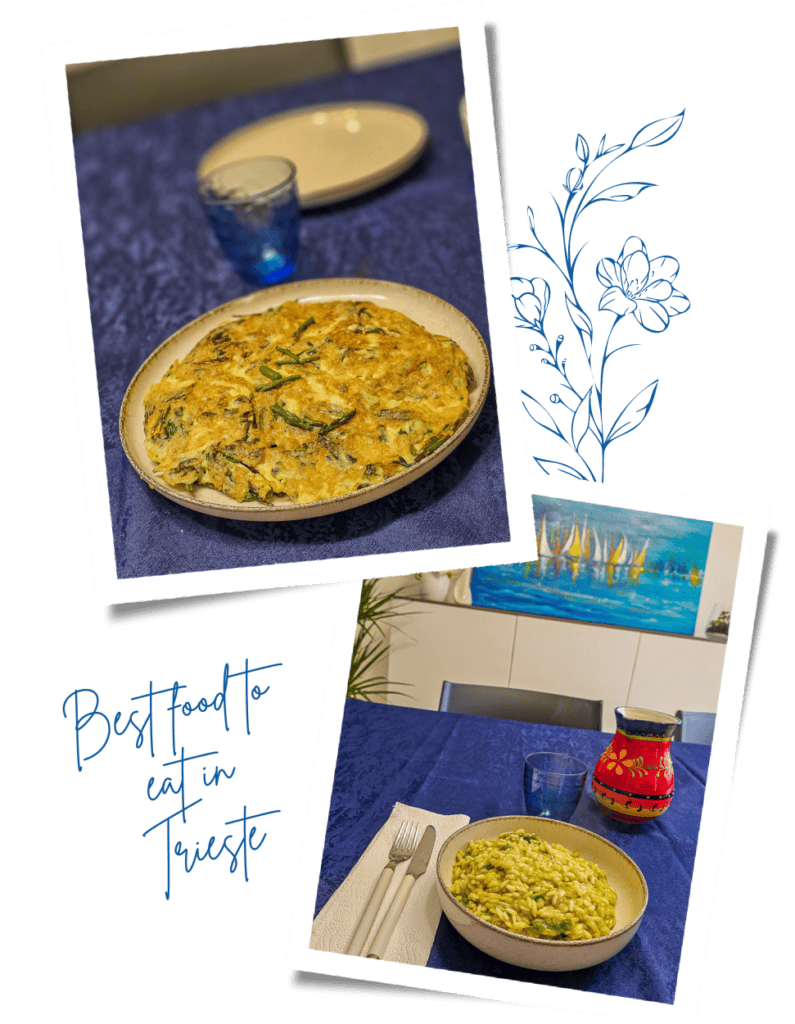
12. Wild asparagus:
Springtime in Trieste wouldn’t be complete without savoring wild asparagus. Unlike cultivated varieties, finding these on restaurant menus can be a challenge.
That’s where the thrill of the hunt comes in! Many locals, like my parents, head to the forests around Trieste to forage for these delicacies. My mom even freezes them to enjoy their unique flavor throughout the summer.
Regarding recipes, I can’t resist a creamy risotto with wild asparagus or a simple scramble of eggs and some local sausages, both bursting with the earthy goodness of wild asparagus. The photos above testify to my mom’s culinary skills—a delicious snapshot from my recent visit home to Trieste.
Fish courses in Trieste

13. Sardoni marinati:
Marinated Sardines is one of the typical ways to eat sardines in Trieste. The sardines are marinated with lemon juice and spices, and it is an absolute dish to taste in Trieste. You can find it in most local seafood restaurants.

14. Sardoni in Savor:
Another fish dish I could not miss to add to my complete food guide is the Sardoni in Savor, another way to eat sardines in Trieste.
They are deep-fried and then marinated in a sauce with a stew of onions, vinegar, and whine. Some people like to add pinenuts and sultanas.
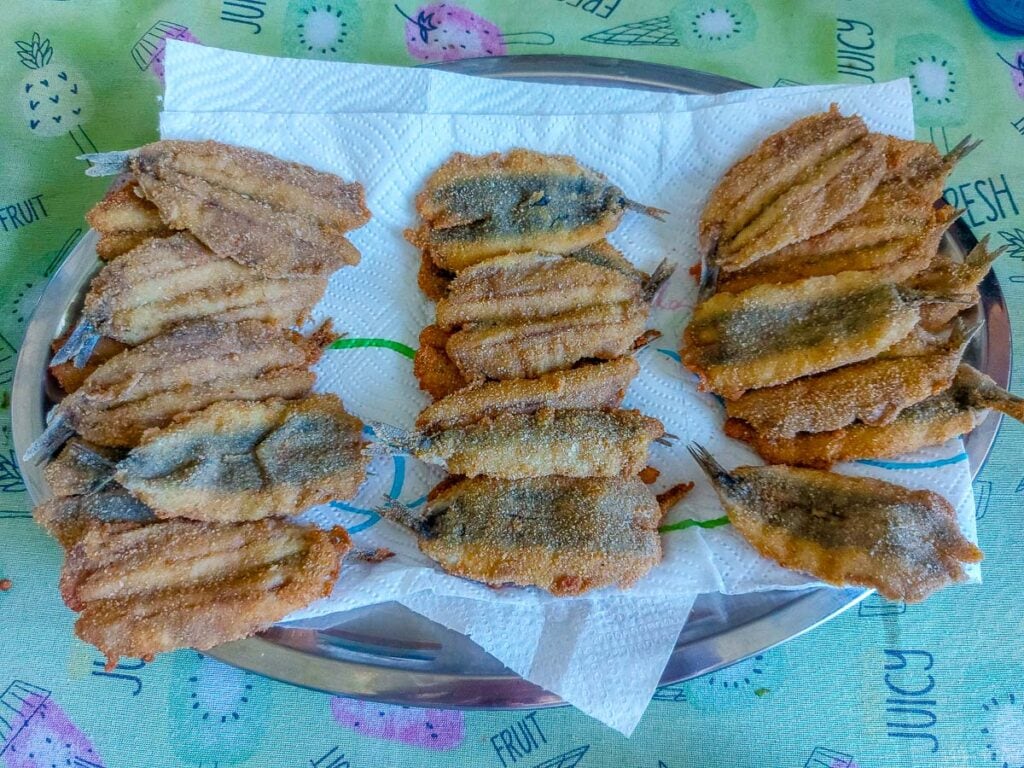
15. Sardoni Fritti / Sardoni Impanati:
Sardoni fritti is fried sardines and sardoni impanati (my favorite ones) are breded sardines. In the picture above, you can see some of my mom; She makes them very often. They are one of the most local foods to eat in my hometown.
They are perfect for a summer lunch with a good glass of local wine. You can also have them in a local “Osteria” (local old-style wine bar where you can eat local dishes) as an aperitivo.

16. Baccala mantecato:
This excellent recipe mixes salted cod, olive oil, and garlic; all whipped together until it becomes a spreadable cream. It is perfect with polenta or, as I like, on toasted bread. It goes spread on toast or a slice of polenta. It is my favorite, and I always eat it when I return home.
You can also find Baccala mantecato in Venice. If you fancy a day trip from Trieste, check out my Venice Travel Guide.

17. Granzeola o Granzievola:
Granzeola is perfect as a starter. It is spider fish meat. It is deliciously served in its shell, but it is sometimes used to make a delicious sauce with tomatoes to add to some fresh pasta. It is not always available and is pretty expensive, but if you find it on the menu, it is worth trying.
This is another one of my favorite foods; I highly recommend you try it (but it’s not my favorite to prepare). Cleaning the spider fish is time-consuming and labor-intensive, so it is more expensive than other seafood.
Hey Traveler!
If you find this article helpful, share it on your social media. Maybe someone you know will, too. Let’s help other travelers! Thank you from your super-organized travel blogger!
Wine in Trieste?
If the answer is Yes! See the Prosecco Origins Wine Tasting in Trieste!

18. Antipasto di pesce crudo:
Antipasto di pesce crudo is a starter with mixed raw fish and seashells. One of my friends goes crazy about it and always orders it. I took that picture once I had dinner with him. It is trendy in Trieste because the fish is always fresh.

19. Pasta alla Busara:
Another one of my favorite foods to eat when I dine out in Trieste is pasta alla Busara. It is an unmissable dish on a food guide. It is a sauce made with crayfish or lobster, fresh tomatoes, and white wine. It is delicious, and you have to try it. It goes with spaghetti, fusi, or even better with bavette pasta (a different spaghetti shape).
Remember not to wear white if you plan on eating spaghetti alla Busara, or at least protect your clothes by placing the napkin on your chest.

20. Fusi:
Fuzi is a handmade pasta that goes perfectly with every sauce (picture above with Busara sauce). Two of my favorites are crayfish and wild asparagus or with truffle. If you love truffles, check out the Truffle Experience in Istria. Also, hen sauce is a perfect match.
Visiting Trieste?
Check out “The Most Complete Guide of Trieste” for all the information you need to make your next trip successful.
21. Baccala in bianco o in umido:
Baccala in white or stew is another recipe that should be included in every food guide about Trieste. It is made with salted cod, but this time, it is a fish stew. It can be white like in the picture or red (with tomatoes), and it goes perfectly with polenta.
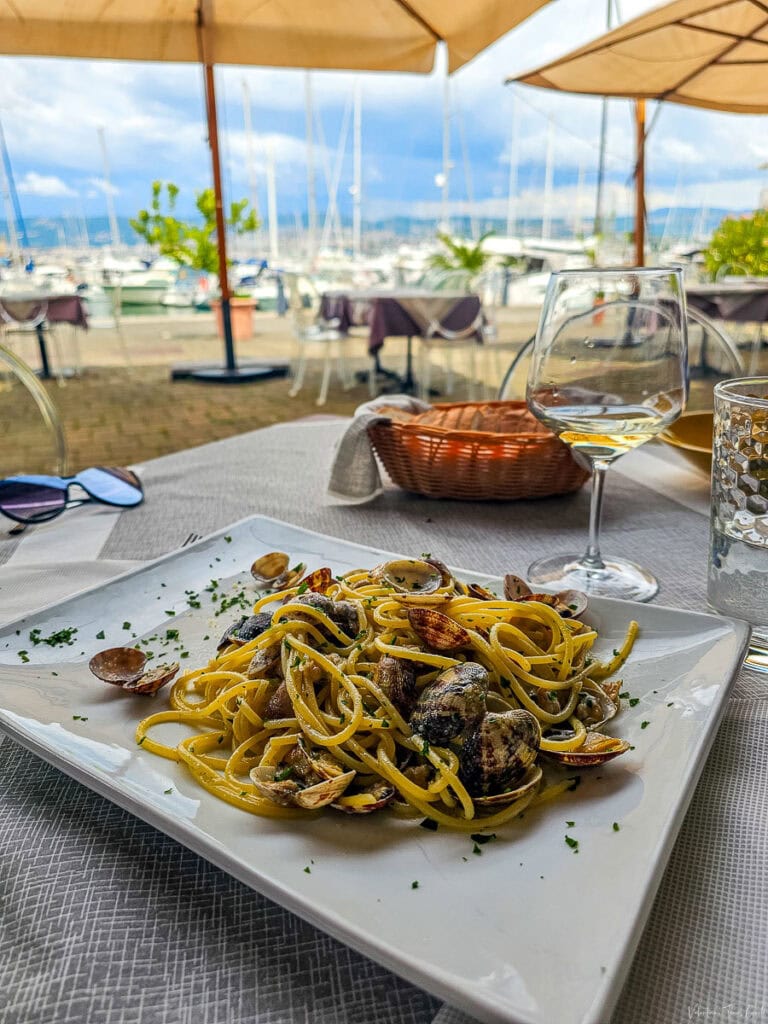
22. Spaghetti with Clams:
Spaghetti con Vongole (clams) is one of my favorite pasta dishes to eat during the summer. Clams grow in the Trieste Gulf, so they are locally sourced and fresh to be served to you. If you like spicy food, ask your waiter to get it with a bit of chilly; it’s my favorite!

23. Seppie in tecia or in umido:
Seppia in tecia (cuttlefish in the pot) or in umido is another fish stew made with tiny cuttlefish and tomatoes. It is amazingly good with polenta and a must-try when visiting Trieste.

24. Fritto misto:
This is one of my favorites when I want to eat something not precisely healthy ( deep-fried) but delicious. In Trieste, you will mostly find it with fresh fish (if you follow my local’s advice and dine only in the best restaurants in the city).
Sometimes, they will tell you which fish is available because it depends on what has been caught overnight. It usually includes prawns, squid, and other little local fish.
Love the organized traveler’s life?
Tired of travel anxiety ruining your getaways?
✈️ Join my community of anxious travelers and unlock stress-free adventures. 🔓 You’ll receive:
- Weekly travel tips & discounts
- Detailed itineraries and a budget planner
- My FREE 42-page guide to becoming a super-organized traveler
And much more! Start planning your dream vacations with confidence.


25. Pedoci alla Scottadeo or Cozze alla Scottadito:
You will find “Pedoci alla Scottadeo” (mussels) in almost every fish restaurant in Trieste. The best months to eat them are May to August when they are tastier. “Pedoci alla Scottadeo” is made up of mussels with olive oil, garlic, white wine, and parsley (some add a few bread crumbs).
There is also a second version made with tomato sauce. I think both versions are good. Another way to cook it is with mussels and other kinds of shellfish and crustaceans from the Adriatic Sea.
In Trieste, you will find a lot of fresh fish, so many restaurants change their menu based on what the sea offers each season.

26. Grigliata mista di Pesce:
As you might have already understood, fish is one of the best foods to eat when you are in a seaside city. The mixed plate of grilled fish is one of the healthiest options in this food guide.
It’s perfect for those on a diet or in case you overindulged in the previous days and want to eat something healthy. Fresh fish from the sea, grilled with vegetables or polenta on the side—it’s delicious!

27. Fish Soup:
Fish soup is one of the most loved soups in a seaside city like Trieste. You can find fish soup made with shellfish, crustaceous, or fish in almost every restaurant, so if you like fish, remember to try this delicacy made with freshly caught local fish.

28. Fish Risotto:
Italy is the best country to eat risotto, so why not try the local fish risotto? It is one of the most local dishes, and it is made with crayfish, prawns, clams, mixed fish, and shellfish.
I’m already getting hungry just by looking at this picture I took on my last visit to Trieste. This risotto in the picture above was delicious and made with crayfish and local herbs!
Fish risotto is one of the most loved foods and one of the dishes I could not miss to include in my food guide.

29. Spaghetti with Bottarga:
Bottarga is a widely used ingredient in Italian fish cuisine. It’s made from the dried and salted roe of fish, usually mullet or tuna. The end product is a firm, compact item that can be grated over pasta or used in various recipes.
Spaghetti with bottarga is a common dish in seafood restaurants, and it can also be purchased as a souvenir to enjoy at home.
You can purchase Cabras mullet bottarga (also called “Sardinian caviar”), which is considered the best bottarga in the world. It is produced according to tradition only with mullet eggs caught in the Cabras Lagoon or the tuna bottarga. You can find them in local food shops and the EATALY shop on the Trieste waterfront.


30. Octopus salad:
Octopus salad is a seafood appetizer typical of Mediterranean cuisine and can be found in many fish restaurants in the city. It is a delicious dish with pieces of octopus boiled in flavored water and seasoned cold with extra virgin olive oil (used in all Italian recipes), parsley, and salt.
It can be mixed with boiled potatoes (my favorite) or grilled vegetables.

31. Pasta with cicale di mare:
One of my favorite seafood first courses is pasta with sea cicadas. You can also find sea cicadas as a starter on a bed of salad. They are boiled and then seasoned with only a pinch of salt and excellent extra virgin olive oil.
You can find them at some seafood restaurants, but unfortunately, they are not very common. The picture shows one of my lunches with my parents. My mom found them at the fishmonger’s and made them with pasta the first time they met my now husband, Lajos.

32. Grilled local calamari:
A healthy choice for a light dinner in Trieste is grilles local calamari, maybe with baked potatoes or grilled vegetables. My favorite way to enjoy grilled calamari is with an oil mixed with fresh parsley and garlic.
Most restaurants in Trieste serve calamari, which can be grilled or fried. Grilled is a healthier option, but I always forget about following a healthy diet when I travel. I love to indulge in the local delicacies after a whole day of walking and exploring the city I’m visiting.

33. Adriatic Sea red tuna:
The Adriatic Sea is a haven for delicious red tuna. So, treat yourself to some incredibly fresh tuna at a local restaurant while in Trieste. The photo above features a delectable tuna tartare I enjoyed at Osteria Istriano, which is a personal favorite.
If raw fish isn’t your thing, don’t worry – grilled tuna is another fantastic option in many restaurants.
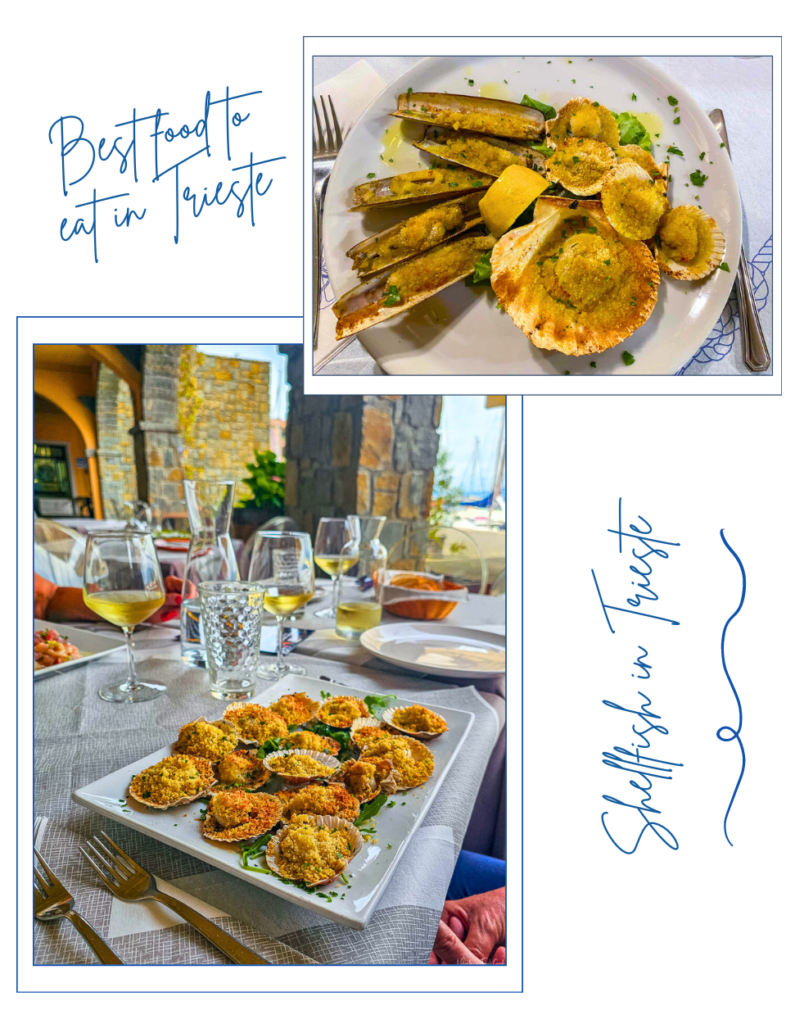
34. Shellfish gratin:
These little shellfish in the picture above are called “Canestrelli.” I have no idea what they call them in English. I googled it, but I could not find an answer.
They are like miniature versions of scallops. They can be found gratin with bread crumbs, extra virgin olive oil, garlic, fresh parsley, salt, pepper, and a splash of white wine or grilled. In Trieste, you will find many shellfish gratins, like scallops and razor clams.

35. Folpetti/Moscardini in umido con polenta:
Musky octopuses are little octopuses; in Trieste, they are made in “umido.” This delicious stew is made with tomatoes, white wine, basil, and extra virgin olive oil (we put it everywhere in Italy), and it is often served with polenta as a side dish.
Want to become a SUPER-ORGANIZED TRAVELER and fight TRAVEL ANXIETY? Check out my Travel Anxiety Tips Page, where you will find all the help, tips, tricks and guides to plan your next adventure in the most organized way!
What to Drink in Trieste

36. The famous Illy Coffee:
It goes well for breakfast, a mid-morning break, after lunch, and to wake up a bit in the afternoon. Italians drink espresso every moment of the day; meanwhile, cappuccino, caffe-latte, etc., are only for breakfast.
If you are a coffee lover like me, having an Italian coffee maker at home is essential. Prepare your Italian-style coffee every morning to start your day in the best way!

37. Caffe Shakerato:
Caffe Shakerato is my favorite Italian drink on those hot summer days when my blood pressure is under my shoes, and I need something fresh to wake up and avoid fainting (yes, my blood pressure can go so low on hot days that I risk fainting). Caffe shakerato is, in my opinion, much better than an iced coffee.
The ingredients of a caffe shakerato are the same as those of an iced coffee, so you have coffee, milk (at request, I prefer it without), sugar, and iced cubes. But instead of being mixed in a cup with a straw, a caffe shakerato is made by shaking all the ingredients together using a tumbler. It is then strained and served in a glass with or without ice.
This is not a typical Trieste drink; you can find it everywhere in Italy. I added it because if you visit Trieste in summer, it can be so hot that this drink can make the heat bearable.

38. Caffe Peratoner:
The famous Caffe Peratoner is a delightful option for breakfast coffee. It is made with delicious hazelnut cream, an espresso shot, and whipped cream. You can find it at Caffe Tommaseo, at Caffe degli Specchi, and some other old-style cafes in the city center of Trieste.
39. Tommaseo Caffe:
The Tommaseo Caffe is a delicious drink for anyone who needs the kick of coffee with an added sweetness. It has dark rum, cherry liquor, hot, creamy chocolate, an espresso shot, cream, and vanilla syrup.
You can only drink this delicious coffee at the oldest cafe in Trieste, the Caffe Tommaseo.

40. Aperol Spritz:
Do you like Aperol Spritz? What about an Aperol Spritz for only 4 euros? I don’t know how much they charge for it in your country, but in London, you must pay a minimum of £10,00 for a glass.
It costs much less in Italy, so go for it and enjoy it as an aperitivo, maybe with local charcuteries. Remember that in some very touristy places, they might charge you more than expected. If you are on a budget, look for local bars where locals have aperitivo. You won’t get overcharged there.
41. Hugo Spritz:
The Hugo aperitif is a typical drink from Alto Adige that I like. It is light and sweet, given by adding elderberry syrup (my favorite), mint leaves, and a slice of lemon or lime.
It is not typical of Trieste but of northern Italy. I recommend you try it during your visit to Trieste. You can find it in most bars in the city center.
Want more about Trieste?
Check out the “Most Complete Guide of Trieste” and get all the information you need to make your next travel successful.

42. Aperitivo Nonino:
Aperitivo Nonino is a spritz made with prosecco, a botanical drink made by Nonino Distillatori and topped up with a spray of Nonino ginger spirit. It is an absolute drink to try while in Trieste. I tried it for the first time a few months ago at SET Sapori Eccellenti, a cafe/food shop where you can have breakfast, a light lunch and dinner, and an aperitivo.
It is one of the best local food shops to visit to buy regional products made in Friuli Venezia Giulia (Trieste’s Italian region).
43. Trieste Regional Wines:
When visiting Trieste, be sure to sample some of the local wines. One of the most renowned wines in the Friuli Venezia Giulia Region is Ramandolo. Another popular choice is Ribolla Gialla, known for its unique flavor.
With its rich and distinctive taste, Schioppettino is another local wine worth trying. Lastly, don’t miss out on Friulano wine, a favorite among locals and visitors.
In the image above, I was in an Osmizza in Trieste, where everything they sell is locally produced. You should check out some Osmizze, too. If you prefer to book a private tour with your travel mates, you can also have a food and wine-tasting experience in Trieste’s traditional Osmiza.
If you love wine and want to explore the city with a local guide, check out the Wine tasting in the Collio wine area with a guided tour of Trieste and Miramare castle.
Hey Traveler!
If you find this article helpful, share it on your social media. Maybe someone you know will, too. Let’s help other travelers! Thank you from your super-organized travel blogger!
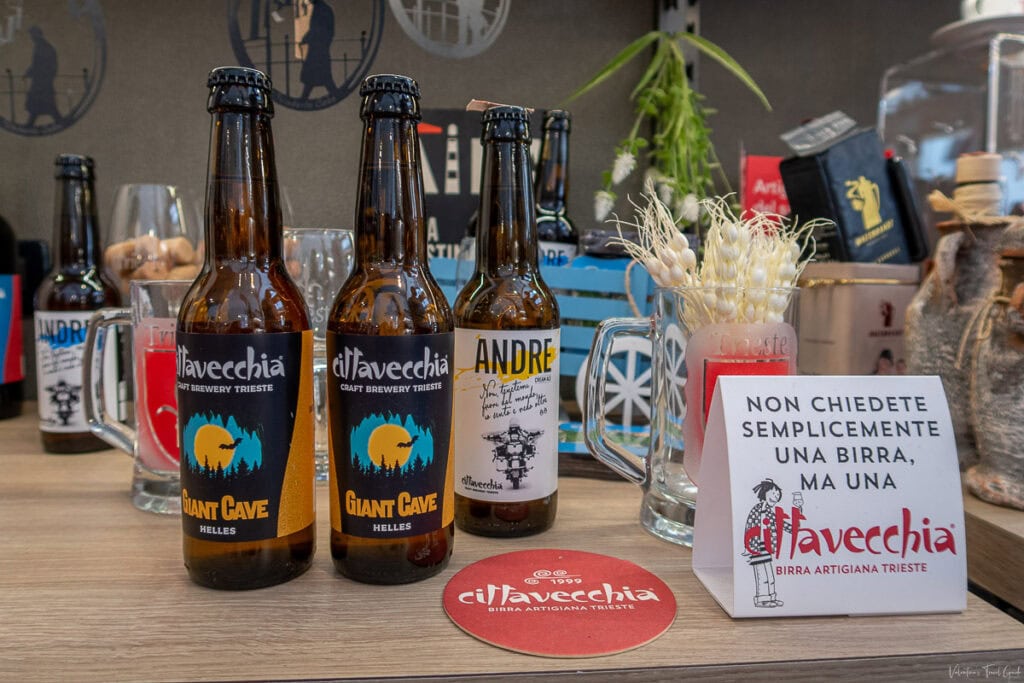
44. Trieste Cittavecchia Beers:
The Cittavecchia Brewery, founded in 1999, produces high- and low-fermentation beers. All Cittavecchia beers are artisanal and, therefore, unpasteurized. The line has been improved with new styles under the Antikorpo Brewing brand since 2020.
You can find Civitavecchia Beer in many local bars and shops. I took this picture at Tipicamente Triestino Souvenirs Shop in Trieste near Piazza Unità d’Italia.
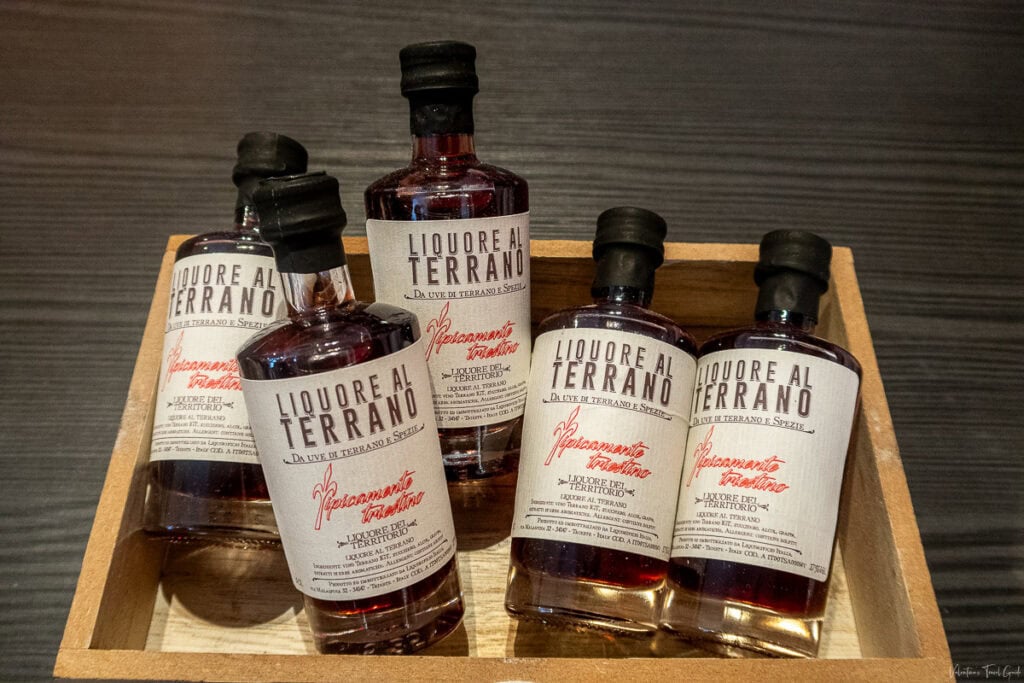
45. Terrano Liquor:
Terrano liquor is unique in Trieste and the Slovenian Karst region. It is one of my favorite liquors worldwide. I always bring some back to London to share with my friends after dinner.
It was created to extend the shelf life of Terrano wine. The liquor combines Terrano wine with cane sugar, lemon, orange juice, alcohol, and Cinnamon. The result is a sweet and aromatic product with hints of red fruits while maintaining a moderate alcohol content of no more than 17°.
You can buy terrano liquors in many food shops in the city center and at the Souvenir shop “Tipicamente Triestino” via Luigi Einaudi behind Piazza Unita’ D’Italia.
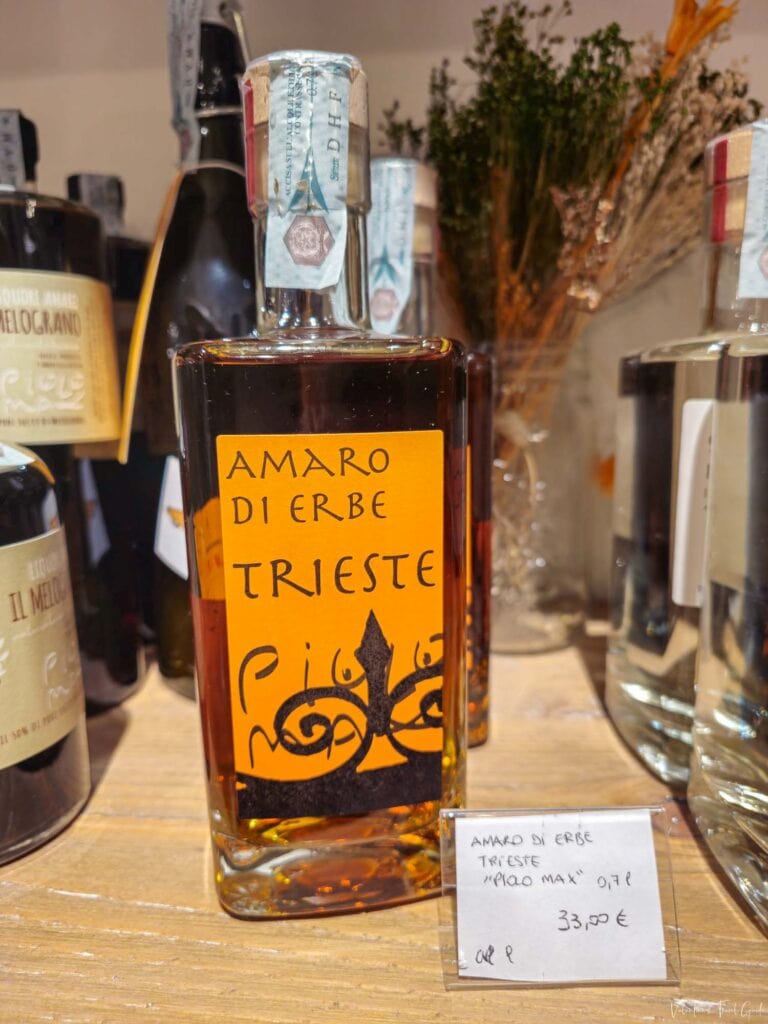
46. Amaro alle Erbe / Herbal Liquor:
Amaro alle erbe is a bitter herbal liqueur from my hometown known for its strong and bold flavor.
It is made by carefully blending various ingredients, including hops, gentian, dandelion, eucalyptus, orange peel, absinthe, and cinnamon. Combining these herbs and spices creates this traditional Italian liqueur’s unique and distinctive taste.
You can find it at Piolo & Max Shop in Trieste as well as many restaurants and local food shops in the city center.
DID YOU LIKE THIS POST?


Save it on Pinterest!

Tired of chaotic travel plans and
last-minute stress?
My 42-page guide on how to plan a super-organized trip is your passport to stress-free adventures! Discover expert travel tips, insider secrets, and actionable advice to transform your travel experience.
From crafting meticulous itineraries to packing like a pro, my guide has you covered. Download now and unlock the key to super-organized travel.

47. Grappa:
Grappa is a distinctive Italian spirit often enjoyed as a digestive. It is made by distilling the leftover pomace from the wine-making process, which includes grape seeds, stalks, and stems.
With an alcohol content of 37.5 to 60 percent, grappa can also be used as an ingredient in cocktails for a unique twist (or added to cakes as my mom often does, like in the apple strudel, where she soaked the raisins in it for months, for example; the result is delicious).
Grappa is particularly popular during cold winter nights in Trieste. It provides a warm and satisfying end to a hearty meal. One of the most famous Grapa brands in most bars, restaurants, and food shops is the Nonino Grappe, made in Udine, only one hour by car from Trieste.

Before you go…
And there you have it, my darling traveler! Your taste buds are undoubtedly tingling with anticipation for your upcoming Trieste adventure. Remember, indulging in local cuisine is essential to the cultural experience. So, from the rich, meaty Jota soup to a delicate starter of raw, freshly caught fish, embrace the culinary delights Trieste has to offer.
Indulge in Trieste’s unique flavors, and don’t be afraid to ask for recommendations – the locals are passionate about their food! After all, a happy tummy makes for happy exploring, and with a belly full of these regional specialties, you’ll be unstoppable.
Now, if you’re feeling overwhelmed by planning your trip’s details, fear not! I’ve poured my travel-obsessed heart into creating a super-organized guide that takes the stress out of vacation planning. It’s jam-packed with tips and tricks to craft the perfect itinerary, freeing you to focus on the joy of exploration.
Just download my free guide to “Conquering Chaos: The Super-Organized Traveler’s Handbook,” and consider yourself one step closer to a flawlessly fabulous Trieste adventure!
Your super-organized travel blogger
Xoxo Valentina
Follow me
